


If you poisoned your neighbor’s water supply, you’d get sued, more probably arrested. But when it comes to pesticide companies? State lawmakers almost gave them a free pass.
In 2024 and 2025, lawmakers in Florida and Tennessee tried to pass laws that would make it nearly impossible to sue pesticide makers if their products harmed people or crops — even if those products caused cancer, Parkinson’s, or wiped out an entire orchard. The only requirement? That the chemical had EPA approval.
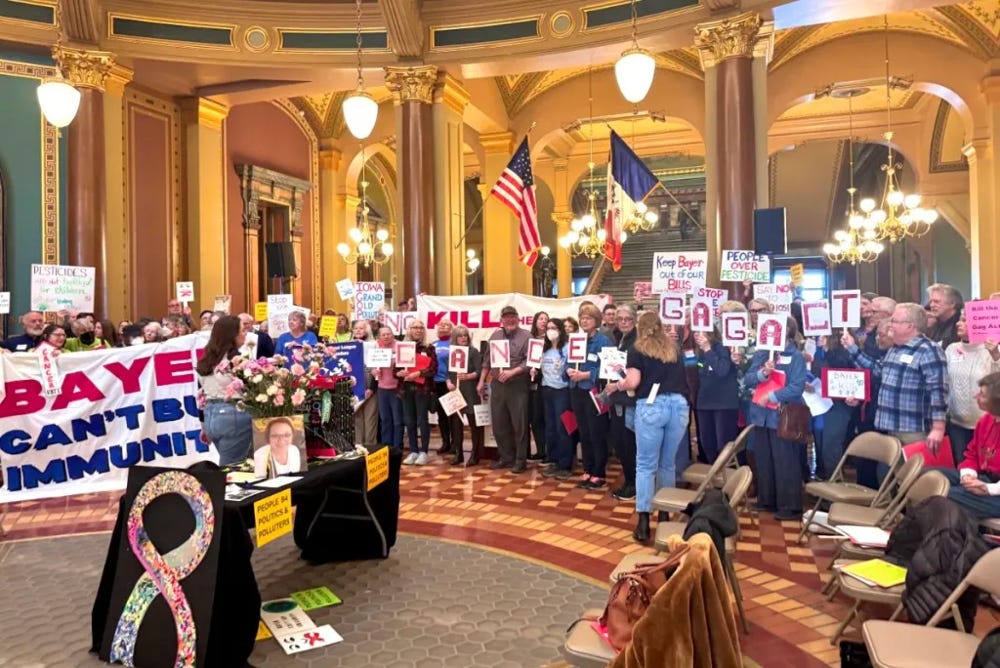
And that’s a low bar. Companies like Bayer (maker of Roundup), Syngenta (maker of paraquat), and BASF have deep pockets and are friends with the rule-makers. But folks fought back. Farmers, teachers, moms, cancer survivors, and even some lawmakers said: not today. The bills stalled. And it’s worth knowing why they showed up in the first place.
The Bills Exists Because Big Ag Got Scared of Lawsuits
A few huge lawsuits you’ve probably heard of flipped the script. Most people had no idea how dangerous some of these sprays were until the court cases started making headlines. Once the truth was out, pesticide companies started looking for their government friends to bail them out.
Glyphosate (Roundup): In 2018, a jury awarded $289 million to Dewayne Johnson, a school groundskeeper with terminal cancer after using Roundup. The case was later reduced to $20M but opened the floodgates. Bayer, which had bought Monsanto, has since paid out over $10 billion to settle roughly 125,000 claims, and still faces tens of thousands more.
“They said it was safe. Now tens of thousands of people are sick, and Bayer’s paid out billions — with thousands still waiting for justice.”
Paraquat: Linked to Parkinson’s disease, paraquat is banned in over 60 countries, except in the U.S. Over 8,000 lawsuits are in motion. Syngenta and Chevron quietly settled the first scheduled trial in early 2026 before it could reach a jury.
Dicamba: This one isn’t about cancer, it’s about chemical drift (when pesticide or herbicide sprays move through the air and land where they’re not supposed to). A Missouri peach farm sued Bayer and BASF after dicamba sprayed on their neighbors property wiped out their orchard. The jury awarded $265 million and hundreds of similar lawsuits followed. The peach farm was forced to close.
2,4-D (part of Agent Orange): Still legal and now being used more often, especially in GMO crops. The WHO says it’s possibly carcinogenic. Farmers say it’s already damaging specialty crops, and studies have shown its harmful effects.
We’ve linked some of the studies and reviews of 2,4-D at the end of this article.
Florida Failed to Shield Pesticide Sellers
In 2024, Florida lawmakers introduced HB 347 to make pesticide sellers immune from lawsuits as long as they used products with EPA-approved labels. Opponents pointed out that this would also protect bad actors, like an exterminator spraying banned chemicals or a seller ignoring health complaints. Still, the House passed it. But the Senate didn’t take it up.
In 2025, lawmakers tried again with HB 129/SB 992. This time, more people were watching. Farmworker groups, environmental advocates, and even some Republicans spoke out. The bills were pulled before final votes. Public pressure worked.
Tennessee Tried A “Get-Out-of-Jail-Free” Bill That Didn’t Make It
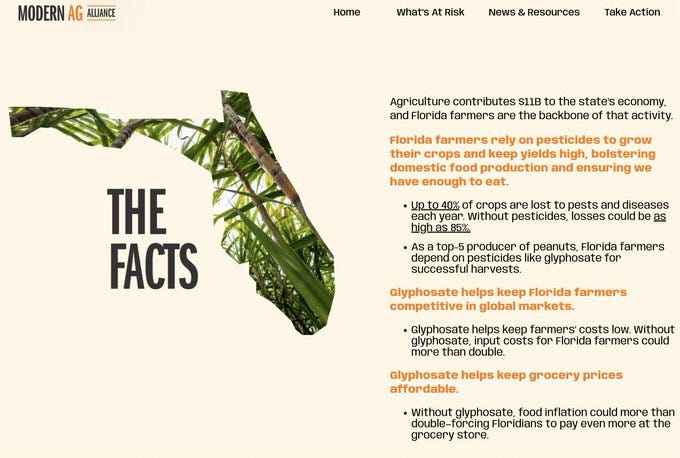
Tennessee’s HB 809 was almost identical to Florida’s HB 129/SB 992. If a pesticide had an EPA label, you couldn’t sue the company, even if it harmed your health. After pushback in 2025, lawmakers delayed the bill. In 2026, they tried again. It failed again.
Advocates rightly called it what it was: a corporate immunity bill written for Bayer. And lawmakers, feeling the heat from constituents, didn’t want to be the ones who stripped families of their right to sue after getting cancer.
The Bigger Picture: Other States, Same Script
Florida and Tennessee aren’t alone. Similar bills showed up in at least a dozen states. North Dakota and Georgia passed them. Iowa, Missouri, and others backed off after public outcry. The playbook is the same: use farmers as a shield claiming they need the law, but really it’s Bayer and its lobbyists pushing it.
The same companies that sell chemical pesticides often own the seed patents too. So when a farmer buys genetically modified seeds from Bayer, they’re usually locked into using Bayer’s matching herbicides. It’s not just a business deal, it’s a system that traps farmers in a cycle of chemical dependence.
Even Congress got involved. In 2025, a rider was added to a federal spending bill that would’ve done the same thing nationwide. It got stripped after people raised hell.
This isn’t just legal fine print, these bills would have:
Blocked families from suing after toxic exposure
Let pesticide companies avoid accountability
Removed pressure to reform dangerous products
We’re not talking about banning all pesticides. We’re talking about keeping the right to hold someone accountable if their product gives you cancer or kills your orchard. In Florida and Tennessee, people stood up. And they won, for now. But these bills will be back. And when they do, we need to be ready.
— Brian