

Let me just start with saying, I’ve watched the videos and yes I think weaning is ethical.
If you’ve spent any time online (especially in vegan or animal-rights spaces—you’ve probably seen them too. A calf loaded into a trailer, bawling. A mother cow running the fence line, calling back. The captions do the rest of the work for you.
“This is cruelty.”
“This is why animal agriculture is immoral.”
“This is what they don’t want you to see.”
I get why those videos hit people in the gut. They’re supposed to.
I get it more than most, because I wasn’t always standing on this side of the conversation. I was vegan for over two years. I followed the activists. I shared the posts. I believed, sincerely, that if we would just “leave animals alone,” nature would sort everything out in some utopian, harmonious way.
But here’s the thing you only learn when you leave the screen and step into a pasture with ranchers doing the right things:
Nature is not utopian. Nature is cruel
And care is not the same thing as sentimentality.
What Weaning Actually Looks Like on Wrich Ranches
When people imagine weaning, they imagine a cold, industrial process. Machines. Indifference. Profit over life.
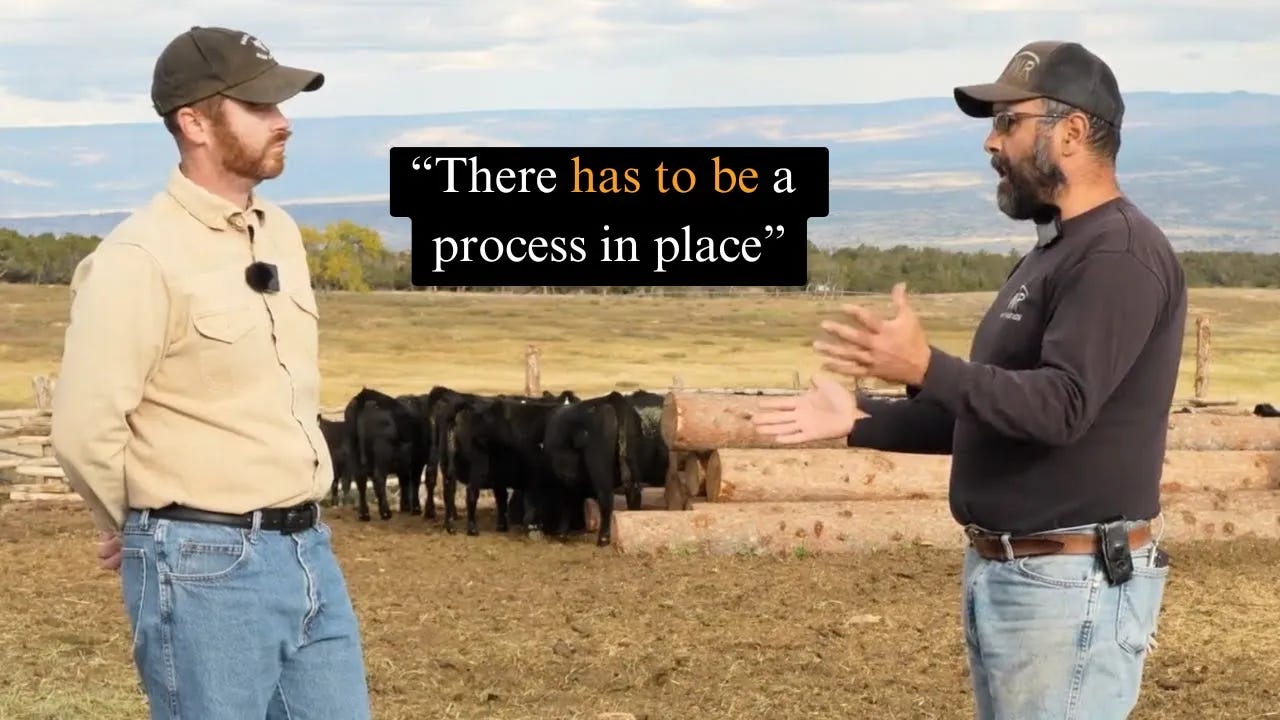
That picture collapses the moment you talk to a real rancher like Jason Wrich.
When calves are weaned on regenerative operations, it doesn’t happen in some distant feedlot. It happens in the rancher’s backyard within earshot of their home. They hear it. They can’t escape the sound and anxiety it brings.
For a couple of days, there’s bawling. Calves calling for their mothers. Mothers calling back. If you’re human and you’ve spent any time around animals, it pulls on your heart strings because you want it to stop.
Ranchers aren’t immune to that, they’re people too. If anything, they’re more exposed to it than the people criticizing them from afar.
But sympathy alone doesn’t make a system ethical. Responsibility does and the right thing to do doesn’t always lead to the crying stopping.
What the Online Videos Don’t Show
Here’s the reality most people never hear, because it doesn’t fit their narrative.
Cows have incredibly strong mothering instincts. Stronger than what’s often healthy in a managed system.
Left entirely on their own, a mother cow will allow an 800-pound calf to continue nursing, even while she’s pregnant with her next calf. When that new calf is born, the older one will often shove the newborn aside and keep drinking.
That’s not hypothetical. That happens. That’s ‘Mother Nature’.
So what’s the alternative? Let the newborn starve? Let the mother’s body break down under constant demand?
This is where the phrase “just let nature handle it” starts to unravel.
Nature Is Brutal—We Just Edit It Out
People invoke “mother nature” as if she’s gentle by default.
She’s not. She can be one cruel SOB…
In the wild, elk will sometimes give birth to twins, and only allow one to nurse. The other gets kicked away and dies. That’s not cruelty in the moral sense. It’s selection. It’s survival math.
That’s ‘Mother Nature’.
So when we talk about ethics, we need to be honest about what we’re comparing things to. The choice isn’t between “perfect harmony” and “evil farming.” The choice is between managed responsibility and unmanaged brutality.
Regenerative ranchers choose responsibility.
Why Weaning Exists at All
Weaning isn’t about convenience. It’s about setting animals up for long-term health.
Every calf on a regenerative ranch is being prepared for a role:
Some will become bulls.
Some will become replacement heifers.
Some will become steers raised for beef.
Each path requires strength, resilience, and health. It’s rancher’s responsibility to set the calf on it’s path and ensure the health of the mother.
That means:
Clean, high-quality hay
Proper mineral supplementation
Constant access to clean, flowing water
Low stress
No unnecessary medical interventions
On proper regenerative operations like Wrich Ranches, calves aren’t vaccinated because they haven’t been exposed to the conditions that require it. Their immune systems are built slowly, within a stable herd, on healthy pasture.
Stress during weaning is short-lived. Disease risk is low. Recovery is fast.
That trade-off matters.
Care Doesn’t Look Like a Disney Movie
One of the hardest things to accept (especially if you come from an activist background) is that care isn’t always pretty.
Care sometimes means making a hard decision early so things don’t go wrong later.
Care looks like:
A rancher checking cattle in the freezing rain at midnight
A ranchers hearing a cough in the herd and dropping everything to investigate
A ranchers noticing whether a calf is coughing up cud, or actually sick
That kind of attentiveness doesn’t show up in a 30-second clip.
But it defines the entire system.
Why This Debate Feels So Emotional
I don’t think most people criticizing weaning are evil or stupid. I think they’re disconnected…and I completely understand.
I was.
My entire view of animal agriculture used to be filtered through factory farming footage. And to be clear, industrial agriculture deserves the criticism it gets.
But when that becomes the only lens, everything else gets flattened.
You stop seeing stewardship.
You stop seeing trade-offs.
You stop seeing people who care deeply and act accordingly.
And you replace complexity with morality plays. Life on a ranch isn’t what the idyllic Disney narrative, nor is it cruel-reality of Mother Nature. It’s somewhere in-between and it’s on the rancher to make the tough decisions.
Ethics Requires Context
If ethics were as simple as “never cause distress,” nothing alive would qualify.
Birth causes distress. Predation causes distress. Winter causes distress.
The real ethical question isn’t “Does this ever cause stress?”
It’s “Does this system respect the animal, the land, and the long-term health of both?”
Regenerative ranching isn’t perfect. No system is. But it’s honest about the world we live in.
What Changed My Mind
If I had visited a regenerative ranch before I became vegan, I don’t think I ever would have been one.
Not because I stopped caring about animal, but because I started understanding them.
I saw that care isn’t absence.
It’s presence.
It’s attention.
It’s responsibility.
And sometimes, it’s making a call that looks harsh in isolation, but humane in context.
The Real Disconnect
The tragedy here isn’t the weaning process.
It’s that most people will never see it in person.
They’ll never hear the bawling and see the recovery.
They’ll never see the health of the mothers afterward.
They’ll never see calves thriving weeks later.
They’ll just see the clip… and be told what to feel.
That’s the real ethical failure: a food system so distant that we argue about it in abstractions instead of realities.
A Final Thought
You don’t have to agree with eating animals to engage honestly with the people who raise them.
But if we’re going to talk about ethics, we owe it to each other, and to the animals, to talk about the whole picture, not just the most emotionally efficient slice of it.
Because the truth is harder than the videos.
And it’s worth facing anyway.
Viva La Regenaissance,
Ryan, Founder